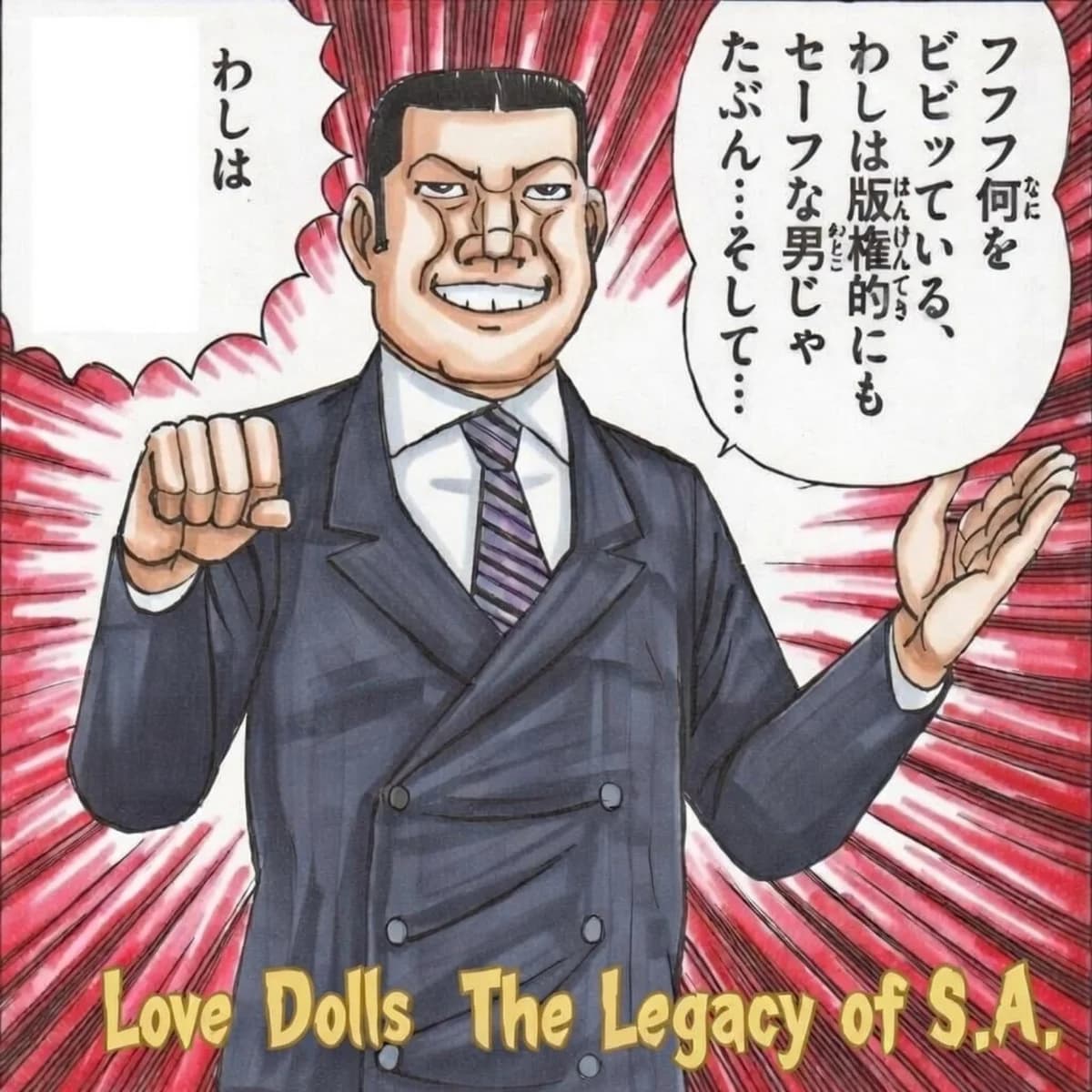
This is the work of a friend from Nagasaki. He is already sixty years old, yet he still chases his singular vision of the avant-garde, as if time itself were merely another obsolete convention to be dismantled and discarded. This particular piece traces the life of the Japanese prime minister who was gunned down 2022. But it does not present his story as solemn history. Instead, it approaches him like a distorted reflection in a carnival mirror—recognizable, yet warped by irony and unease. Through biting humor and theatrical exaggeration, the artist exposes how deceptive, theatrical, and at times outright deranged the policies of Japan. truly were. The laughter the work provokes is uncomfortable laughter—the kind that reveals truths people would rather not face. Some of the paintings themselves emit sound. When you stand before them, faint murmurs, fractured speeches, and ghostly echoes seem to seep from the pigment, as if the canvas remembers everything. These sonic fragments mock the foolishness of his loyal entourage—the hollow men who circled him like obedient satellites, many of whom still walk freely, untouched by consequence. Their voices linger, disembodied, ridiculous, and faintly sinister. There is a sense that the artist is not merely documenting a man, but performing a quiet autopsy on power itself. The colors flicker between reverence and accusation. The figures seem to dissolve at the edges, as if history is already erasing them, grain by grain. And yet, beneath the satire and noise, there is something more intimate: the portrait of a nation caught between memory and amnesia, between spectacle and truth. The work does not shout. It hums. It waits. It watches. Even now, decades into his life, the artist continues forward, stubborn and unyielding, pursuing that invisible horizon where art stops being decoration and becomes a weapon—sharp enough to cut through illusion, and patient enough to outlive the men it condemns.