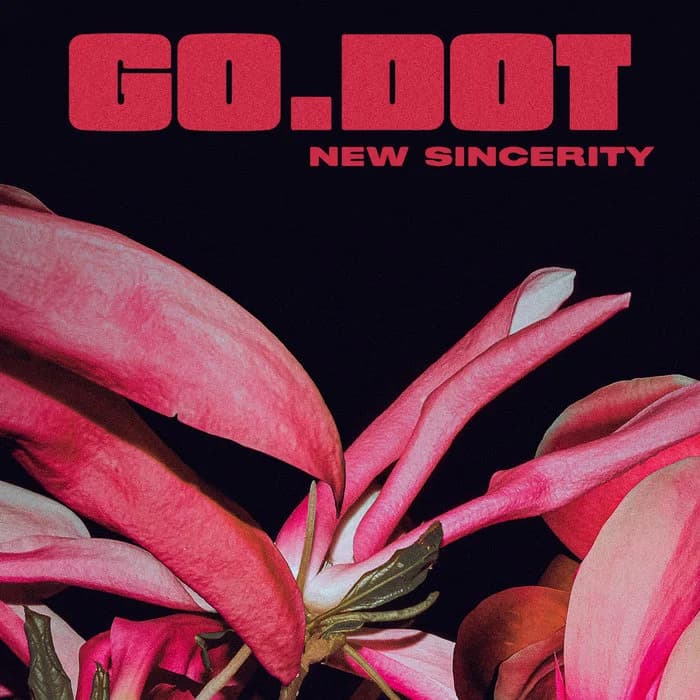
New Sincerity
go.dot
“What passes for hip cynical transcendence of sentiment is really some kind of fear of being really human, since to be really human [...] is probably to be unavoidably sentimental and naïve and goo-prone and generally pathetic.”
The sentence above may be the single most important passage for us in the entire New Sincerity movement. David Foster Wallace, author of Infinite Jest, is responsible for the dominant interpretation of this phenomenon. His writing confronts the attitudes of the modernists who, Wallace argued, were obsessed with creating new aesthetics and formal innovations. Modernist novels were judged primarily by their formal ingenuity, resulting in a relentless pursuit of originality; their authors were marked by a pathological self-consciousness, and their works by a kind of textual vertigo.
Wallace argued that artists should dare to risk being considered naïve in order to repair what cynicism, irony, and even post-irony have destroyed in culture. In the mid-1990s and early 2000s, he drew attention to the dangers of the post-sarcasm present in television advertising, criticized the excess of symbols and “images ready for passive consumption” in the world around us, and observed how phrases were being displaced by emoticons. All these forces shaping the consciousness of the time led to deepening alienation and intellectual shallowness.
We are a band that experiments boldly with sound, though in this field, too, we have learned something from New Sincerity: musical arrangements are decisions, and the use of particular tools inevitably goes hand in hand with shifts in meaning. As befits a band with such a name, we adhere to a Beckettian principle: “no symbols where none were intended.”
We have limited our palette of post-production gimmicks in favour of clarity, while in the songwriting itself we have looked more kindly upon symmetry and conventional verse structures. There might even be half a chorus.
Released: 10/9/2026
5 left artist