Maraxartist

Marax

Georgia

marax.bandcamp.com/

Marax began in the summer of 1998. After a year of experiments with sound, field recordings, and manipulated electronics, the first release, Feel Free…., emerged. Since then, the project has moved fluidly between harsh electronics, dark ambience, power electronics, and lo-fi textures, each release marking a different point on that spectrum.

Sort by:
Andrea Yates

Andrea Yates

Marax

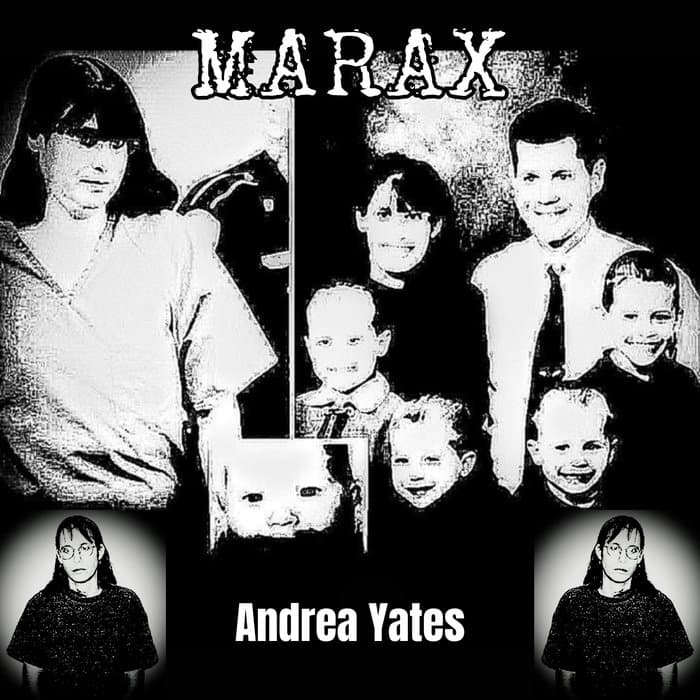
Andrea Yates was a Texas mother whose case became one of the most widely discussed examples of postpartum psychosis in U.S. legal history. In 2001, Yates, who had a long, well-documented history of severe mental illness following childbirth, was responsible for the deaths of her five young children. For years prior, Andrea had experienced extreme depression, hallucinations, and delusional thinking, particularly after pregnancies. She had been hospitalized multiple times and diagnosed with serious psychiatric conditions, with doctors warning that additional pregnancies could worsen her illness. Despite this, her mental health continued to deteriorate after the birth of her youngest child. At the time of the incident, Andrea was suffering from postpartum psychosis, a rare but severe condition that can cause a person to lose touch with reality. She later stated that her actions were driven by delusions and a belief that she was protecting her children from eternal harm. The case sparked intense national debate about mental illness, maternal health, criminal responsibility, and the adequacy of support systems for women experiencing severe postpartum disorders. Andrea Yates was initially convicted, but that conviction was overturned on appeal due to false expert testimony. In a retrial, she was found not guilty by reason of insanity and committed to a state mental health facility rather than prison. The Yates case remains a landmark example used in discussions about postpartum psychosis, the legal system’s handling of severe mental illness, and the importance of early intervention and mental health care for new mothers.

Released: 3/19/2026

64 left
Composition For Absence

Composition For Absence

Marax

composition for absence is a four-hour, uninterrupted durational work presented as a single continuous piece. The sound unfolds gradually, moving through light ambience, darker ambient passages, and near-silent moments, with transitions occurring seamlessly over extended time. Created as a deep-listening experience, the work is intended to induce calm and sustained meditation, allowing subtle shifts in texture and space to emerge through prolonged attention. Sound sources were developed and manipulated in Reaper using a combination of digital processing tools and custom source material, emphasizing atmosphere, restraint, and the presence of absence itself. Artist bio: Marax began in the summer of 1998, emerging from a primitive lo-fi recording approach rooted in process, texture, and immediacy. Early work was shaped by limited means and raw documentation, gradually evolving as recording capabilities improved and a more defined sonic language took form. From its inception, Marax has functioned as a broad experimental entity rather than a fixed genre project. The work spans a wide range of sound practices, from abrasive harsh noise to dark ambient and death industrial, often emphasizing tension between density and atmosphere, confrontation and immersion. Around 2011, Marax expanded further into reduced and longform approaches, influenced by exposure to lowercase and deep-listening practices. This period marked a shift toward greater restraint, duration, and spatial awareness, exploring subtle detail and sustained environments while continuing to draw from the project’s noise-based foundation. released March 6, 2026 Recorded and mixed by Marax in Reaper, utilizing custom-generated source material processed through ambient and spatial plug-ins, including Atmos 3 Lite, Serenity, and Airwindows filters. The composition was shaped as a continuous four-hour work through gradual layering, reduction, and longform structuring.

Released: 3/6/2026

0 left