Coma Beach artist

Coma Beach

Würzburg, Germany

comabeach.bandcamp.com

Coma Beach is a punk rock/alternative rock band from Würzburg, Germany. The band was formed in 1993 by singer B. Kafka, guitarist Captain A. Fear and drummer M. Lecter, with bassist U. Terror and rhythm guitarist M. Blunt completing the lineup. Coma Beach's musical influences range from Sex Pistols, Ramones, Hüsker Dü, Joy Division, The Cure, The Jesus and Mary Chain to Guns N' Roses, Therapy? and Bad Religion, with their songs frequently straddling the line between punk rock and alternative rock. The band's English lyrics draw on numerous themes and motifs from various authors, such as the existentialist view of the world's utter meaninglessness, as portrayed in Samuel Beckett's plays and novels; the satirical-sarcastic approach to the absurdities of human existence, as employed in Douglas Adams's narratives; the often tragic and – not infrequently – self-inflicted conflicts that countless characters have to suffer through in William Shakespeare's plays; or Arthur Schopenhauer's system of a radical metaphysical pessimism.
Sort by:
Bliss (Kill Your Thoughts Edit)

Bliss (Kill Your Thoughts Edit)

Coma Beach

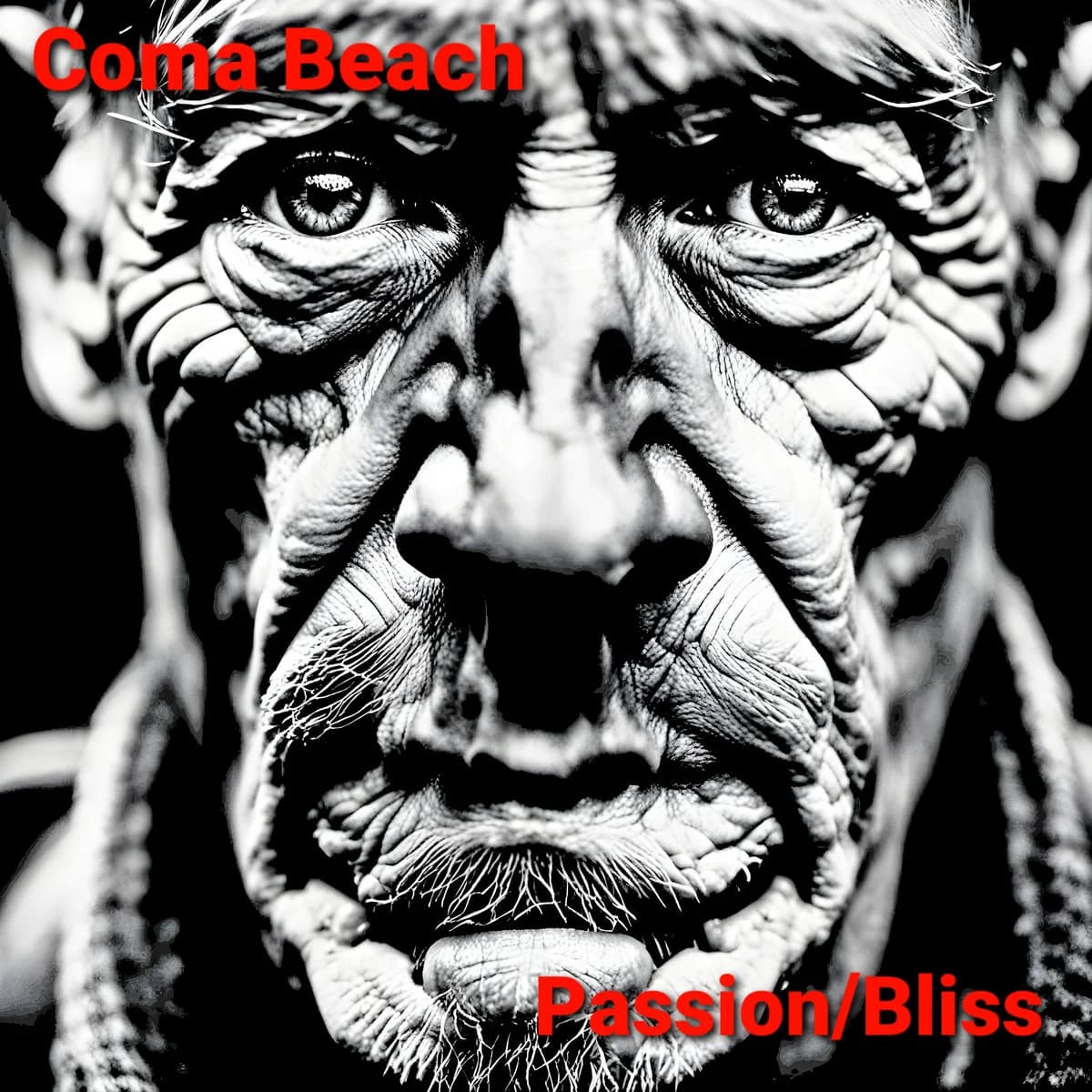
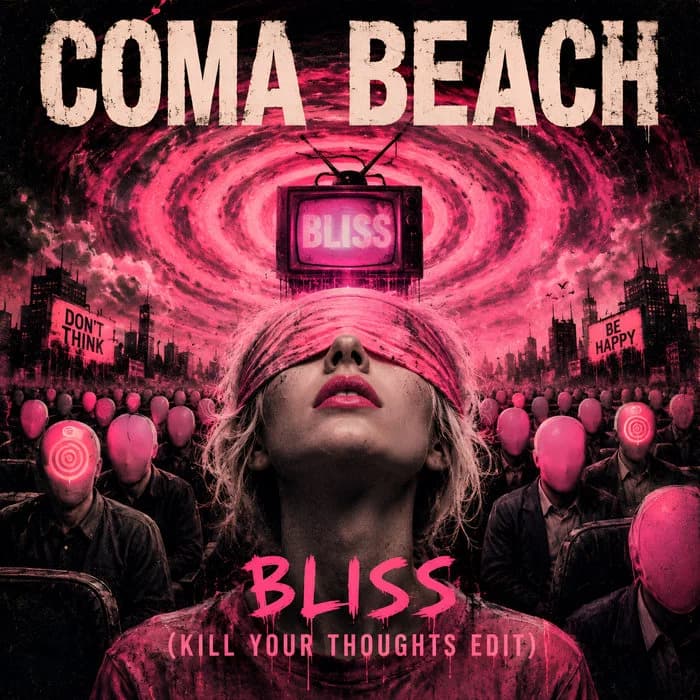
"A mock-hymn to willful ignorance, where blindness is sold as happiness and thought itself becomes the enemy." “Bliss” is a mordant anti-hymn to willful ignorance and manufactured happiness. Coma Beach turns the soft rhetoric of comfort — “bliss,” “pink,” “happiness” — against itself, showing how surrendering thought becomes a social technology: a veil, a mechanism of control, and ultimately a form of moral and political amnesia. The lyric braids biblical darkness (blindness, veils), classical allegory (chains, prisoners), and modern critiques of mass culture (soma, spectacle) into a compact, venomous satire of consumer-political complacency. It’s angry, bitterly witty, and precise: the band don’t simply mourn ignorance — they map the machinery that produces it. "Bliss" is track #5 and - along with its soul-searching sibling "Passion" - the seventh single from our album "The Scapegoat's Agony" (1995) as well as track #2 from our EP "Passion/Bliss" (2025) and track #5 from our compilation "The Scapegoat's Agony (Edits, Odds & Ends)" (2026). The single/EP/compilation version is shorter than the album version. "Passion/Bliss" (2025) is the third and final installment in our "Scapegoat Revisited" EP triptych celebrating the 30th anniversary of our debut album "The Scapegoat's Agony" (1995). The album title is an allusion to the play "Waiting for Godot" by Irish playwright and novelist Samuel Beckett and points towards the – for the most part – painful and excruciating emotional odyssey of the unnamed antihero.

Released: 10/20/2026

3 left
Jesus' Tears (Crimson Stain Edit)

Jesus' Tears (Crimson Stain Edit)

Coma Beach

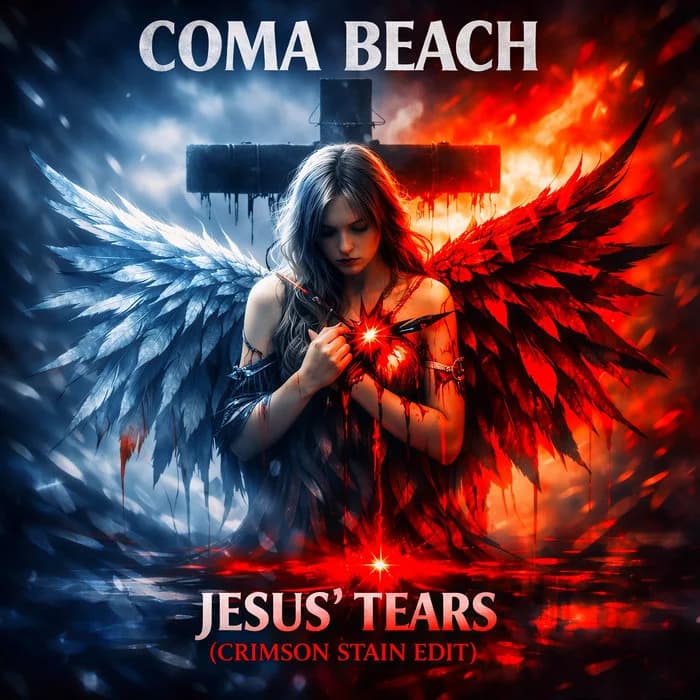
"A crucifixion hallucination, a cry for vengeance, and a vision of divine sorrow." “Jesus’ Tears” is a brutal, theologically charged nightmare that upends familiar Passion imagery: the speaker who is crucified “next to Jesus Christ” is not a saintly bystander, but a defiant, wounded narrator whose suffering becomes the seed of a promised spiritual vengeance. The lyric folds Gospel scenes, Marian sorrow, apocryphal angelics, and Gothic revenant lore into a short, violent parable about sacrificial violence, communal guilt, and the moral ambiguity of revenge. Musically, the song’s refrain — “My mad life was punished / But my spirit will take revenge” — operates like a warped liturgy: equal parts confession, accusation, and vow. "Jesus' Tears" is track #7 and the first single from our album "The Scapegoat's Agony" (1995) as well as track #5 from our EP "A Madman's Dream/Mind Descending" (2024) and track #7 from our compilation "The Scapegoat's Agony (Edits, Odds & Ends)" (2026). The EP/compilation version - a radio edit - is shorter than the album/single version. "A Madman's Dream/Mind Descending" (2024) is the second installment in our "Scapegoat Revisited" EP triptych celebrating the 30th anniversary of our debut album "The Scapegoat's Agony" (1995). The album title is an allusion to the play "Waiting for Godot" by Irish playwright and novelist Samuel Beckett and points towards the - for the most part - painful and excruciating emotional odyssey of the unnamed antihero.

Released: 9/21/2026

11 left